

How to Become an Emergency Medicine Doctor

Key Takeaways:
- Becoming an emergency medicine doctor typically takes 11 to 12 years after high school, including four years of undergraduate education, four years of medical school, and three to four years of residency.
- Optional fellowship training in areas such as critical care, medical toxicology, or pediatric emergency medicine generally requires one to two additional years, depending on the specialty.
- Experience as an EMT, paramedic, emergency department scribe, or volunteer can strengthen your medical school application and provide valuable exposure to emergency care.
- Emergency medicine has a specialty-specific residency application process that emphasizes clinical performance and Standardized Letters of Evaluation (SLOEs) from emergency medicine rotations.
- Emergency physicians must obtain a state medical license to practice independently and can pursue board certification through the American Board of Emergency Medicine (ABEM).
Emergency medicine physicians care for patients when they need immediate medical attention, whether they're experiencing a life-threatening emergency, a serious injury, or an unexpected illness. The specialty requires you to think quickly, adapt to changing circumstances, and draw on a broad range of medical knowledge to make critical decisions. For those who enjoy variety, problem-solving, and working as part of a healthcare team, emergency medicine can offer a challenging and rewarding career.
Becoming an emergency medicine doctor requires medical school, specialized residency training, and medical licensure. Along the way, you'll have opportunities to gain hands-on experience, develop essential clinical skills, and explore whether emergency medicine is the right fit for you.
Steps to Become an Emergency Medicine Doctor
The path to becoming an emergency medicine physician involves several stages, each with its own educational requirements and opportunities to gain clinical experience. As you progress, you'll move from building a foundation in the medical sciences to treating patients under supervision and eventually developing the specialized skills needed to manage medical emergencies independently.
1. Complete Your Undergraduate Education
Most medical schools require a bachelor's degree, but you don't need to major in a particular subject to pursue emergency medicine. Biology, chemistry, and other science-related majors are common choices, but you can study any field as long as you complete the prerequisite courses required by the medical schools where you plan to apply.
Because emergency physicians treat patients with a wide variety of conditions, consider taking courses that provide a broad foundation in human health, including:
- Biology and chemistry: Build your understanding of the biological processes and chemical interactions involved in illness and treatment.
- Anatomy and physiology: Learn how the body's systems function and respond to injuries and medical emergencies.
- Psychology: Develop insight into human behavior and mental health conditions, including psychiatric emergencies.
If you're already working as an EMT, paramedic, nurse, or another healthcare professional, your experience can provide a valuable foundation for medical school. However, you'll still need to meet the academic requirements. If you already hold a bachelor's degree, a postbaccalaureate program may allow you to complete missing prerequisites without earning another degree.
2. Gain Healthcare and Emergency Medicine Experience
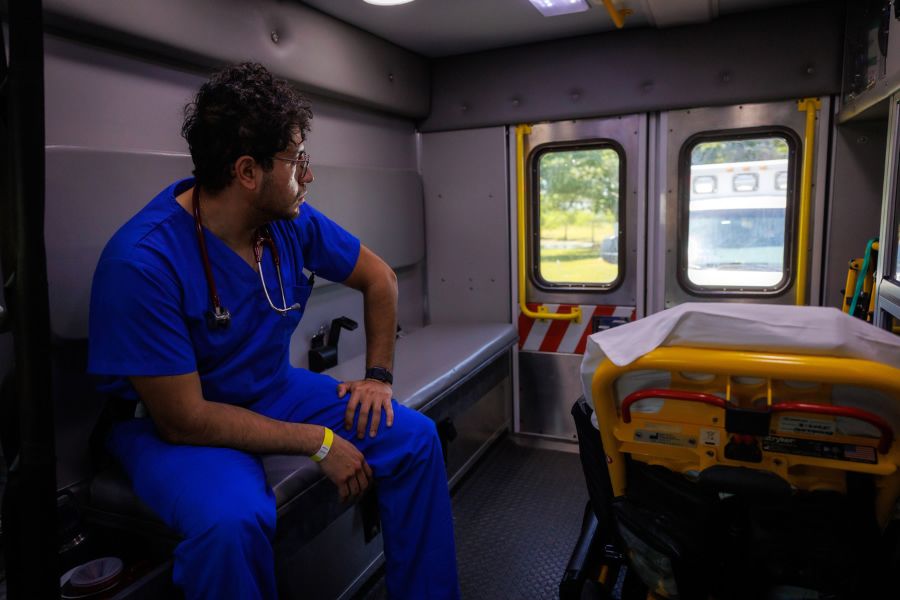
Gaining firsthand experience in emergency care can strengthen your medical school application while helping you determine whether the specialty is right for you. Emergency physicians work with patients of all ages, often making decisions under pressure and managing several cases simultaneously. Exposure to these environments can help you understand the challenges and responsibilities of the profession.
To prepare for a career in emergency medicine, consider opportunities such as:
- Working as an EMT or paramedic: Gain experience assessing patients, responding to medical emergencies, and providing care in unpredictable situations.
- Scribing in an emergency department: Observe how ER physicians evaluate patients, make treatment decisions, and coordinate care with other healthcare professionals.
- Shadowing emergency physicians: Follow an ER doctor through their shifts to better understand their daily responsibilities, clinical decision-making, and interactions with patients.
- Volunteering in emergency care settings: Explore opportunities with hospitals, emergency departments, or community emergency response organizations to gain exposure to patient care and emergency services.
3. Prepare for and Take the MCAT
The Medical College Admission Test (MCAT) is a standardized exam required by most U.S. medical schools and many international schools. It assesses your knowledge of biology, chemistry, physics, psychology, and sociology, along with your critical thinking and reasoning skills.
Emergency physicians routinely encounter patients with a wide range of medical conditions, often without knowing the underlying cause of their symptoms. The broad scientific foundation assessed by the MCAT is particularly relevant to a specialty that requires you to think critically, draw connections across different areas of medicine, and approach unfamiliar clinical problems. Preparing for the exam can help reinforce this foundational knowledge while demonstrating your readiness for medical school.
4. Complete Medical School and Explore Emergency Medicine
Medical school typically takes four years and combines classroom instruction with hands-on clinical training. Emergency physicians must diagnose and treat a wide range of illnesses and injuries, so nearly every part of your medical education will contribute to the knowledge and skills you'll need in the emergency department.
Years 1–2: Build Your Medical Knowledge
The first phase of medical school focuses on foundational subjects such as anatomy, physiology, pathology, pharmacology, and microbiology. These courses help you understand how the body functions, what causes different medical conditions, and how treatments work.
MD students prepare for the United States Medical Licensing Examination (USMLE) Step 1, while DO students take COMLEX-USA Level 1 and may also choose to take Step 1. Step 1 is graded on a pass/fail basis and is generally taken before or near the beginning of clinical training.
Years 3–4: Gain Clinical Experience
During the clinical phase of medical school, you'll work with physicians and patients through supervised rotations in different medical specialties. These experiences are particularly important for aspiring ER doctors because emergency medicine draws on knowledge from nearly every area of healthcare.
Several rotations are especially valuable for future ER physicians:
- Internal medicine: Develop your ability to evaluate and manage conditions such as heart disease, respiratory problems, and infections that frequently bring adults to the emergency department.
- Surgery: Gain experience evaluating injuries, recognizing conditions that require urgent surgical intervention, and caring for patients before and after procedures.
- Pediatrics: Learn to assess and treat infants, children, and adolescents, whose symptoms and treatment needs can differ considerably from those of adults.
- Psychiatry: Build skills for evaluating behavioral health emergencies, including suicidal thoughts, severe agitation, and acute psychiatric symptoms.
- Emergency medicine: Experience the pace and variety of an emergency department firsthand while learning to assess patients with undifferentiated symptoms, prioritize urgent cases, and develop initial treatment plans.
An emergency medicine rotation gives you a firsthand look at the challenges and responsibilities of working in an emergency department, from managing competing priorities to making decisions with limited information. As you participate in patient care under supervision, you'll have opportunities to apply your medical knowledge, learn from experienced emergency physicians, and determine whether the pace and demands of the specialty align with your strengths and interests.
Your clinical evaluations and licensing examination results, including USMLE Step 2 CK or COMLEX-USA Level 2-CE, will be important components of your residency application. Emergency medicine programs place particular emphasis on assessments from EM rotations, including Standardized Letters of Evaluation (SLOEs).

5. Apply for and Match Into an Emergency Medicine Residency
During your final year of medical school, you'll apply to residency programs where you can receive specialized training in emergency medicine. Programs evaluate applicants based on their academic performance, licensing exam scores, clinical experience, and evaluations from physicians who have supervised their work.
Understanding the Emergency Medicine Residency Match
Emergency medicine residency programs differ in their clinical environments, patient populations, and training opportunities. Some are based primarily at large academic medical centers, while others train residents in community hospitals or across multiple clinical sites. As you compare programs, consider the opportunities to gain experience in trauma care, critical care, pediatric emergencies, and other areas of emergency medicine.
The application and matching process generally involves three stages:
- Submit your applications: Use the Residency Centralized Application Service (ResidencyCAS) to apply to emergency medicine programs. Along with academic records and exam scores, you'll submit clinical evaluations and other materials that demonstrate your preparation for the specialty.
- Complete residency interviews: Programs assess your qualifications and suitability for emergency medicine, including your ability to communicate, work with healthcare teams, and make sound decisions under pressure. Interviews also give you an opportunity to learn more about each program's clinical training.
- Participate in the Match: Rank your preferred emergency medicine residency programs based on factors such as training opportunities, program structure, and location. The National Resident Matching Program (NRMP) then uses an algorithm to match applicants with programs based on their respective rankings.
Emergency Medicine Rotations and Audition Rotations
Your performance during emergency medicine rotations is particularly important when applying for residency. These experiences allow supervising physicians to assess how you approach unfamiliar medical problems, prioritize patient care, communicate with healthcare teams, and respond to feedback.
You may also complete an audition rotation, sometimes called an away rotation, at a hospital with an emergency medicine residency program. At Trinity School of Medicine, students are encouraged to make the most of clinical electives and away rotations by pursuing opportunities that align with their specialty interests and residency goals. Along with gaining experience in a different clinical setting, you'll have an opportunity to demonstrate your abilities to faculty involved in residency training.
Standardized Letters of Evaluation (SLOEs)
Emergency medicine programs also place significant importance on Standardized Letters of Evaluation (SLOEs). Unlike traditional recommendation letters, SLOEs use a standardized format to assess your clinical performance and readiness for residency, often comparing your abilities with those of other applicants.
Many residency programs prefer two SLOEs, including evaluations from emergency medicine rotations at institutions with residency programs. However, requirements vary, and other types of SLOEs are available. Planning your rotations early can help you obtain the evaluations needed for your applications.
How Competitive Is Emergency Medicine Residency?
Emergency medicine residency competitiveness has fluctuated in recent years. According to the 2026 NRMP Main Residency Match results, emergency medicine offered 3,198 positions, of which 3,058 were filled, representing a 95.6% fill rate.
While emergency medicine offers a substantial number of residency opportunities, your chances of matching will depend on your qualifications and the programs you apply to. Competitiveness can vary considerably between programs, making it important to research their requirements and select programs that align with your experience, qualifications, and career goals.
Matching Into Emergency Medicine as an International Medical Graduate
Graduates of Caribbean and other international medical schools regularly secure emergency medicine residency positions in the United States. According to the 2026 NRMP Main Residency Match results, 319 U.S.-citizen international medical graduates (IMGs) and 93 non-U.S.-citizen IMGs matched into emergency medicine positions.
If you're attending a Caribbean medical school, you can strengthen your residency application by planning ahead and focusing on these important areas:
- Meeting ECFMG requirements: Complete the applicable examination and certification requirements to establish your eligibility for U.S. residency training.
- Gaining relevant U.S. clinical experience: Pursue emergency medicine rotations that allow you to develop your clinical skills, demonstrate your abilities, and obtain strong SLOEs, ideally from physicians associated with residency programs.
- Researching residency programs: Look for emergency medicine programs that welcome applications from international graduates and review their specific requirements and training opportunities.
With thoughtful preparation, relevant clinical experience, and guidance from experienced advisors, you can build a strong application and maximize your chance of matching into emergency medicine as an IMG.

6. Complete Your Emergency Medicine Residency
After matching into an emergency medicine residency, you'll begin treating patients as a physician under the supervision of experienced emergency doctors. Residency programs typically last three years, although some extend to four.
What You'll Learn During Emergency Medicine Residency
Your residency in emergency medicine will combine extensive experience in the emergency department with rotations in other areas of medicine, including critical care, trauma surgery, and pediatric emergency medicine. Your training will prepare you to evaluate unfamiliar conditions, recognize life-threatening emergencies, and provide appropriate treatment for patients with a wide variety of needs.
Key areas of training include:
- Emergency department care: Assess patients with a broad range of symptoms, determine which conditions require immediate attention, develop treatment plans, and make decisions about hospitalization or discharge.
- Critical care and resuscitation: Learn to stabilize critically ill patients and manage life-threatening conditions such as cardiac arrest, respiratory failure, and shock.
- Trauma care: Evaluate serious injuries, participate in trauma resuscitations, and coordinate treatment with surgeons and other specialists.
- Pediatric emergencies: Develop the skills to recognize and manage urgent illnesses and injuries in infants, children, and adolescents.
- Emergency procedures: Gain hands-on experience with procedures such as intubation, airway management, wound repair, and point-of-care ultrasound.
What to Expect During Emergency Department Shifts
As an emergency medicine resident, you'll work rotating shifts that may include nights, weekends, and holidays. During a single shift, you might treat someone with a minor injury, evaluate a patient experiencing chest pain, and respond to a life-threatening emergency. You'll work closely with nurses, paramedics, specialists, and other members of the emergency care team.
Alongside your clinical shifts, you'll participate in lectures, case discussions, simulation exercises, and other educational activities designed to strengthen your medical knowledge and decision-making skills.
Developing Independence as an Emergency Physician
Early in residency, you'll work closely with supervising physicians as you learn to evaluate patients, develop treatment plans, and perform emergency procedures. As you progress, you'll manage increasingly complex cases, make more independent clinical decisions, and help guide junior residents and other members of the care team.
By the end of your residency, you'll be prepared to manage the diverse medical needs of an emergency department, from routine complaints to critical emergencies.
7. Consider Fellowship and Subspecialty Training Within Emergency Medicine
After completing your emergency medicine residency, you can begin practicing as an ER doctor without additional training. However, if you develop a particular interest in an area of emergency care, you may choose to pursue a fellowship. These programs typically involve another one to two years of specialized training, depending on the field.
Common emergency medicine fellowship options include:
- Critical care medicine: Specialize in treating critically ill patients, often in intensive care units, where you'll manage complex, life-threatening conditions.
- Medical toxicology: Develop expertise in diagnosing and treating poisonings, drug overdoses, adverse medication reactions, and exposure to hazardous substances.
- Pediatric emergency medicine: Focus on treating infants, children, and adolescents experiencing serious illnesses, injuries, and other medical emergencies.
- Sports medicine: Diagnose and treat sports-related injuries, manage musculoskeletal conditions, and help patients recover and return to physical activity.
- Emergency medical services (EMS): Help oversee prehospital emergency care, including ambulance services, paramedic training, and emergency response systems.
- Emergency ultrasound: Develop advanced skills in using bedside ultrasound to diagnose medical conditions, guide procedures, and make time-sensitive treatment decisions.
You don't need to decide whether to pursue a fellowship early in your medical education. Your clinical rotations and residency training will expose you to different aspects of emergency medicine, giving you opportunities to discover your interests and determine whether additional specialization aligns with your career goals.
8. Obtain Medical Licensure and Board Certification
To practice independently as an emergency medicine physician, you'll need to meet the medical licensing requirements of the state where you plan to work. You can also pursue board certification to demonstrate your expertise in emergency medicine.
Medical Licensure
To obtain a full medical license, you'll generally need to complete all three steps of the United States Medical Licensing Examination (USMLE) for MD graduates or all three levels of the Comprehensive Osteopathic Medical Licensing Examination (COMLEX-USA) for DO graduates.
Each state establishes its own licensing requirements, which may include additional documentation, background checks, and verification of your medical education and postgraduate training.
Emergency Medicine Board Certification
Although board certification is separate from medical licensure, it is an important professional credential that demonstrates your knowledge and qualifications in emergency medicine. Certification can strengthen your credibility with patients and employers and may expand your opportunities for employment and hospital privileges.
The American Board of Emergency Medicine (ABEM) offers board certification to eligible physicians who complete emergency medicine residency training and meet its examination and professional requirements. The process includes passing a written Qualifying Examination followed by a Certifying Examination that assesses clinical decision-making and other skills essential to emergency medicine practice.

Skills You’ll Need as an ER Physician
Emergency physicians need broad medical knowledge and technical skills to provide effective care. However, the unpredictable nature of emergency medicine also calls for important personal and professional skills, including:
- Composure under pressure: You must remain calm and focused when treating critically ill or injured patients, even when circumstances are stressful or rapidly changing.
- Sound decision-making: Emergency physicians often make important treatment decisions before all the information about a patient's condition is available. You need to evaluate the evidence, recognize uncertainty, and act decisively when necessary.
- Clear and compassionate communication: You must explain medical information to patients and families, often during frightening or emotionally difficult situations, while communicating effectively with other healthcare professionals.
- Teamwork and leadership: Emergency departments depend on close collaboration among physicians, nurses, paramedics, and specialists. You need to work well with others and help coordinate care during emergencies.
- Adaptability: You may encounter patients with vastly different conditions, symptoms, and medical needs during a single shift. Being able to adjust quickly to changing circumstances is essential.
- Strong organizational and prioritization skills: Managing multiple patients requires you to recognize which cases need immediate attention, balance competing responsibilities, and maintain continuity of care.
- Physical and mental stamina: Emergency medicine often involves long shifts, overnight hours, and demanding clinical situations. Maintaining your focus, energy, and well-being is important for providing consistent patient care.
FAQs About Becoming an Emergency Medicine Doctor
How Long Does It Take to Become an ER Doctor?
Becoming an emergency medicine doctor typically takes 11 to 12 years after high school. This includes four years of undergraduate education, four years of medical school, and three to four years of emergency medicine residency. Additional fellowship training is optional and can extend the timeline.
What Degree Do You Need to Become an ER Doctor?
In the United States, emergency physicians typically hold a Doctor of Medicine (MD) or Doctor of Osteopathic Medicine (DO) degree. Graduates of eligible international medical schools may also qualify with an equivalent medical degree. Before medical school, you'll typically complete a bachelor's degree, although you don't need to major in a particular subject as long as you fulfill the necessary prerequisites.
How Competitive Is Emergency Medicine Residency?
Emergency medicine residency competitiveness varies by year and program. While the specialty offers thousands of residency positions nationwide, your chances of matching depend on factors such as your academic performance, licensing exam scores, clinical evaluations, and the programs you apply to.
Can an EMT, Paramedic, or Nurse Become an ER Doctor?
Yes. Many healthcare professionals pursue medical school after gaining experience as EMTs, paramedics, or nurses. Your experience can provide valuable preparation for emergency medicine, including familiarity with patient care, emergency procedures, and working under pressure. However, you'll still need to complete medical school, residency, and the required licensing examinations to become a physician.
How Long Is Emergency Medicine Residency?
Emergency medicine residency programs typically last three or four years, depending on the program. During this time, you'll gain supervised experience managing medical emergencies, treating critically ill patients, performing procedures, and making increasingly independent clinical decisions.
Can You Become an ER Doctor After Attending a Caribbean Medical School?
Graduates of eligible Caribbean medical schools can pursue emergency medicine residencies in the United States. In fact, it’s one of the more common paths for IMGs. You'll need to meet applicable ECFMG certification requirements, complete the necessary USMLE examinations, and successfully match into an emergency medicine residency program.
What Is the Difference Between an ER Doctor and an Urgent Care Doctor?
ER doctors specialize in evaluating and treating patients with medical emergencies, including life-threatening illnesses and serious injuries. Urgent care physicians generally treat less severe conditions, such as minor injuries, infections, and common illnesses that require prompt attention but don't typically need emergency department resources.
Emergency physicians complete specialized residency training in emergency medicine, while urgent care doctors may come from different medical specialties, including family medicine, internal medicine, and emergency medicine.
What Is an ER Doctor's Work Schedule Like?
Emergency physicians generally work scheduled shifts, which can include nights, weekends, and holidays because emergency departments operate around the clock. While shift work can provide flexibility and days off during the traditional workweek, schedules vary by employer and may involve irregular hours.
Achieve Your Dream of Becoming an ER Doctor With Trinity School of Medicine
Emergency medicine requires a broad medical education, strong clinical judgment, and the confidence to care for patients in unpredictable situations. At Trinity School of Medicine, small class sizes, accessible faculty, and early clinical experiences help you build these skills while receiving personalized guidance throughout your education.
During your clinical years, Trinity coordinates your rotations, allowing you to complete most core clerkships within one clinical region and build lasting relationships with physicians and healthcare teams. You'll also have opportunities to pursue electives aligned with your interest in emergency medicine and prepare for residency. Trinity welcomes students from a wide range of backgrounds, including healthcare professionals and career changers looking to take the next step in their careers.
Ready to explore your path to becoming an emergency medicine doctor? Speak with a Trinity admissions counselor to learn more about the MD program, clinical training opportunities, and how Trinity can help you work toward a future in emergency medicine. You can also request to speak with a Trinity alum to hear firsthand about their experiences in medical school, clinical rotations, and residency.


