

Caribbean MD Program Academics
Personalized Education

A Supportive, Student-Focused Caribbean MD Program
Trinity School of Medicine’s accredited Caribbean MD program is thoughtfully designed to blend academic rigor with the individualized support students need to succeed. Students spend just 16 months completing basic science coursework at our campus in St. Vincent, less than most other Caribbean medical universities, before transitioning to clinical training in the U.S.
At Trinity, we help students achieve academic excellence through small classes, accessible faculty, and a curriculum aligned with U.S. and Canadian standards. Our approach helps you master essential sciences and clinical skills, develop the professional habits that matter in patient care, and build a strong foundation for residency and your medical career.
Key Academic Highlights

Academic Calendar
Trinity’s three-term schedule lets you begin basic sciences in the Caribbean in January, May, or September. This flexible structure helps you start when ready and maintain steady momentum through each 15-week term.

Curriculum
Experience the impact of an integrative spiral curriculum, an evidence-based learning approach designed to reinforce knowledge through repetition and incremental complexity.
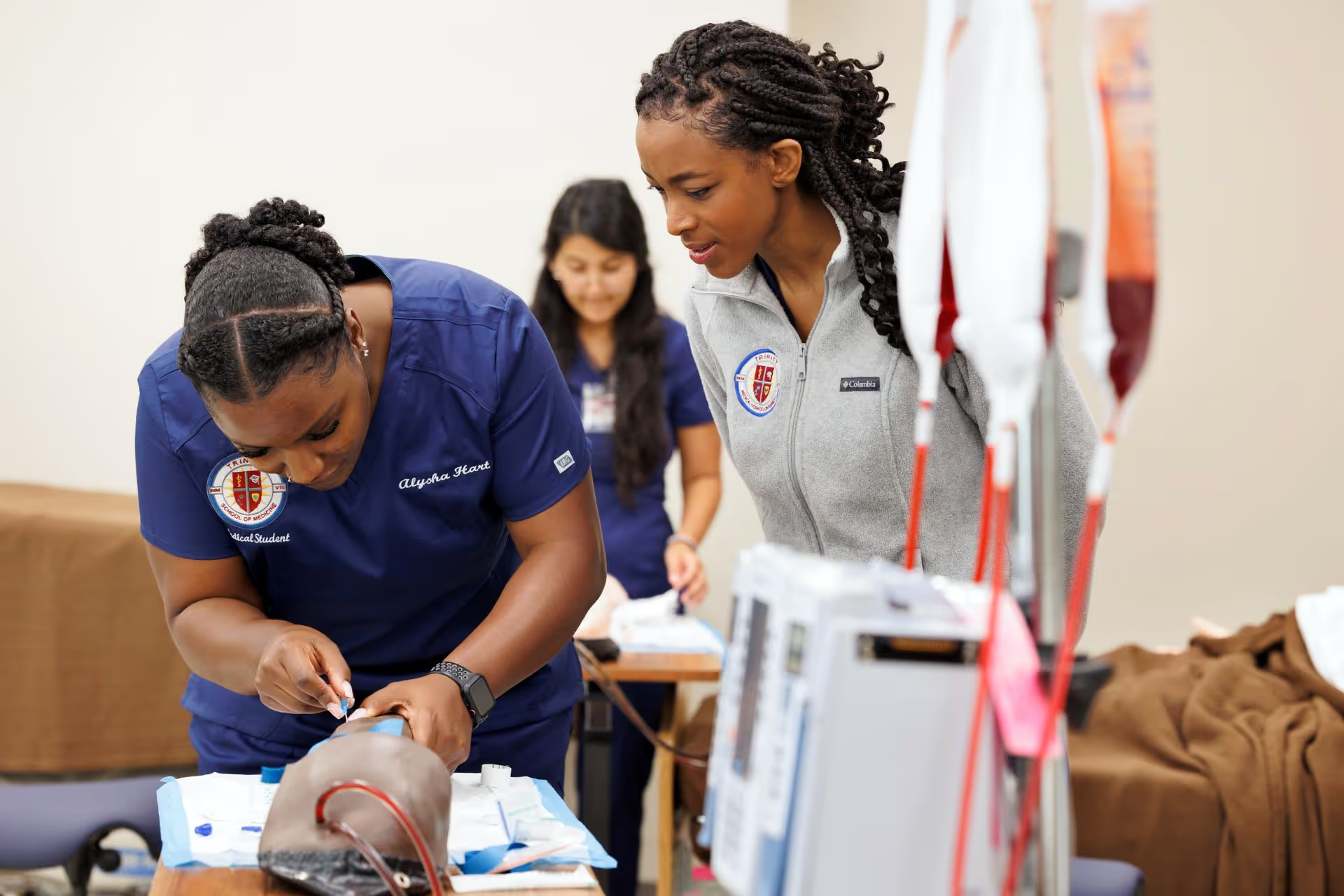
Term 5 - Step 1 Prep
Students move from our Caribbean MD program to the U.S. to receive fully immersive Step 1 prep designed to reinforce core concepts, improve exam readiness, and ensure a smooth transition to clinical rotations.

Clinical Sciences
Complete most core rotations within your chosen clinical region, providing a consistent home base with opportunities to pursue additional clinical experiences throughout the country, if desired. All rotations are coordinated by a Trinity clerkship administrator to minimize gaps and keep your clinical training on track.

16 Months

- Prep for USMLE Step 1
- 48 weeks
- 27 weeks
Over The Last 5 Years
.avif)
Academic Competency
Trinity’s faculty is responsible for meeting the following competency-based objectives through our courses and clerkships.
Research Opportunities
The quality of education at Trinity School of Medicine is demonstrated by the research and scholarly accomplishments of our students and faculty. Students at Trinity’s Caribbean MD program have numerous opportunities to get involved with research by partnering with professors on projects currently underway or even designing their own projects under the mentorship of faculty. Students may also have the opportunity to write and publish case reports during their early clinical exposure at Milton Cato Hospital in SVG.
Once in clerkships, students have opportunities to partner with preceptors on research projects and case reports or complete a research elective rotation. In addition, clinical students with an interest in research are invited to join the Trinity Journal Club, where students can present case studies, conference posters, or simply talk about research ideas.

Accreditation That Opens Doors Worldwide
Trinity is accredited by CAAM-HP, the leading accrediting authority for Caribbean medical universities. This accreditation allows graduates to enter the residency match process in the United States and Canada and pursue licensure in both countries. With a degree from Trinity’s Caribbean MD program, you gain global opportunities and the foundation to practice medicine in communities around the world.
Two Pathways That Support Your Medical Career Goals
Trinity’s Caribbean MD Program offers two academic pathways that give students the flexibility to pursue the future they want. Each option provides a structured, supportive route through the MD curriculum, whether you plan to enter residency or pursue a non-clinical career in healthcare.
- Traditional MD Pathway for students preparing for USMLE exams, clinical rotations, and the residency match
- Executive MD Pathway for students seeking an MD degree without immediate plans for U.S., Canadian, or CARICOM residency training


A Flexible Pre-Med Pathway for Future Trinity Students
Trinity also offers an Online Pre-Med Pathway for students who need to complete prerequisite coursework before applying to our Caribbean MD program. This flexible, asynchronous option provides individualized guidance, a clear academic plan, and the foundational science preparation you need to confidently transition into Trinity’s MD program when ready.
Find Your Success at Trinity
Discover the Trinity experience through students and alumni! Learn more about small class sizes, early clinical experience, a consistent clinical home base, and more!
Supportive Community
Where unparalleled support meets student success.
Clinical Rotations
Rotations are scheduled for you within your chosen clinical region.
Small Class Sizes
Feel valued and seen from the very beginning.
MD Program FAQs
What is a Doctor of Medicine?

A Doctor of Medicine is a professional degree awarded to individuals who have completed the necessary education and training to practice medicine. MD holders are trained to diagnose, treat, and prevent illnesses, as well as provide medical care to individuals and communities.
What can you do with a Doctor of Medicine degree?
With a Doctor of Medicine degree, individuals can pursue a variety of medical careers, including becoming physicians, surgeons, researchers, educators, or healthcare administrators. The MD degree opens doors to opportunities in various medical specialties and settings, ranging from hospitals and clinics to research institutions and public health organizations.
How does a 4-year doctoral program differ from other medical programs?
In a 4-year doctoral program, students have a condensed curriculum with a focus on essential medical knowledge and clinical skills. This approach allows students to enter the medical field sooner and begin their residency training earlier.
What are the admissions requirements for the MD Program?
Prior to matriculation, Trinity’s MD program requires:
- Verifiable score(s) on the MCAT exam. Medical College Admissions Test (MCAT) scores are required for all U.S. citizens, nationals, and eligible permanent resident applicants and encouraged for everyone else.
- At least 60 undergraduate credit hours
- One year each of:
- General Biology
- General Chemistry
- English Composition
- And one semester each of:
- General Physics
- Mathematics (Trigonometry, Analytic Geometry, Precalculus, or Statistics is highly recommended)
- Behavioral Science (Intro to Sociology or Psychology)
- Two individual letters of recommendation or one committee letter from your pre-health advising office.
I have some grades in my past I’m not proud of. Will they affect my admission?
Academic performance is obviously an important factor. That said, Trinity places a premium on student experience, character, leadership, communication skills, drive, and passion, recognizing that sometimes grades don’t paint the entire picture. While GPA plays a major part in student selection criteria, we consider trajectory and consistency of grades and examine an applicant’s BCPM (Biology, Chemistry, Physics, and Math) GPA independently of other course work. We are also open to explanations of context and a clear narrative of personal growth.
The reality is that the best doctors aren’t always the best university freshmen. We understand. We think of Trinity as an opportunity to show yourself, and the world, just how great you can be in a focused, supportive environment.
Who should consider our Doctor of Medicine program?
Our Doctor of Medicine program is suitable for individuals who aspire to become compassionate and skilled physicians. Prospective students with a strong academic background, a passion for healthcare, and a commitment to making a positive impact on patient well-being are encouraged to consider our program.
Does the MD program require MCAT scores?
Medical College Admissions Test (MCAT) scores are required for all U.S. citizens, nationals, and eligible permanent resident applicants and encouraged for everyone else. The admissions committee takes a holistic approach, considering various aspects such as academic achievements, personal experiences, letters of recommendation, and medical school interviews to assess an applicant’s suitability for the program.
Can graduates of the MD program practice in the United States?
Yes, graduates of our MD program are eligible to pursue licensure and practice medicine in the United States. Trinity School of Medicine is a CAAM-HP accredited Caribbean med school, ensuring that our graduates meet the necessary standards for licensure. The school provides support and guidance to help graduates navigate the U.S. and Canadian licensing process.
How can I apply to the MD program at Trinity School of Medicine?
To apply to our MD program, please navigate to the admissions page. Here, you will find detailed information about the application process, including medical school admission requirements, deadlines, and instructions for submission. If you have specific inquiries or need assistance, feel free to contact our Admissions Office directly. We invite you to apply to Trinity today!
Can graduates of the MD program practice in Canada?
Yes. Trinity graduates may pursue residency and licensure opportunities in Canada. Trinity’s CAAM-HP accreditation reflects recognized international medical education standards.
Many Trinity alumni have successfully matched Canadian residency programs and now practice across the country in a range of medical specialties.
Residency placement and licensure in Canada are competitive and determined by provincial requirements.
Can graduates of a Caribbean MD program match into competitive specialties?
Absolutely. Trinity graduates have matched into a wide range of specialties, including competitive fields like surgery, anesthesiology, OBGYN, or neurology. Our focused curriculum, early clinical exposure, and dedicated residency support prepare students to excel on licensing exams and stand out as strong candidates in the match process.
What makes Trinity’s MD program different from other Caribbean medical schools?
Trinity stands apart through small class sizes, early clinical exposure, and an unwavering culture of support. Students study medicine in the Caribbean for 16 months, then complete all U.S.-based rotations at a single location with no gaps. Our CAAM-HP accreditation and 96% residency placement rate over the last 5 years reflect proven success.
What are clinical rotations?
Clinical rotations are hands-on training experiences that take place after completing the foundational sciences portion of medical school. During this phase, students work directly with physicians in hospital and clinical settings, gaining real-world experience in specialties such as internal medicine, surgery, pediatrics, and more.
At Trinity School of Medicine, clinical rotations are completed in the United States, with students completing most core rotations within their chosen primary clinical region. This model provides a consistent home base while giving students access to a broader range of clinical settings and training opportunities. Trinity coordinates each student’s rotations, allowing students to focus on their development, build strong relationships with healthcare professionals, and better prepare for the medical residency match.
Where are clinical rotations completed?
After completing the Basic Sciences in St. Vincent and Step 1 preparation in Georgia, students complete their core and elective rotations at affiliated hospitals and clinical sites in the United States. Students choose a primary clinical region, with current options including:
- Southeast, including Warner Robins and other locations in Georgia
- Mid-Atlantic, including Maryland and Virginia
- Southwest, including South Texas
- West Coast, with several sites in California
Students complete most core rotations within their primary clinical region, providing a consistent home base while benefiting from expanded clinical opportunities. Students may also pursue additional clinical experiences throughout the country, if desired. This regional model provides consistency, professional networking opportunities, and continuous hands-on experience in diverse clinical settings.
How does Trinity prepare students for the USMLE Step 1 and Step 2 exams?
Trinity integrates USMLE preparation directly into the curriculum. Dedicated faculty provide guided review sessions, personalized study plans, and practice exams. The fifth term, based in Warner Robins, Georgia, is designed specifically to strengthen test readiness, ensuring students feel confident and well-prepared for Step 1.
What kind of academic and personal support does Trinity provide?
From the first day on campus, students benefit from an engaged faculty and a supportive community. Academic advisors, peer tutors, and personalized mentoring ensure every student receives individual attention. Trinity’s focus on connection and collaboration helps students thrive academically and personally throughout their medical education.
What is Match Day for medical students?
The medical residency match is the process through which medical graduates are placed into residency programs after completing their MD degree. In the United States, this is typically done through the NRMP, a centralized system that matches applicants to training programs based on their qualifications, preferences, and performance.
Match Day is the day when medical students and graduates learn which residency program they have been matched to for their postgraduate medical training.
At Trinity School of Medicine, we prepare students for success in the medical residency match through personalized support, strong clinical training, and dedicated USMLE preparation. With a 96% residency placement rate over the last 5 years, Trinity demonstrates a strong track record of helping students secure residency positions. From early advising to clinical rotations and application guidance, our team works closely with students every step of the way.


