A Full-Circle Journey with World Pediatrics: From High School Volunteer to Medical Student

At Trinity School of Medicine, opportunities to learn and serve extend far beyond the classroom. Through Trinity’s partnership with World Pediatrics, students can connect with physicians from around the world, gain firsthand exposure to pediatric care, and see the impact of global healthcare initiatives.
For one Trinity medical student, Mary Louise Campbell, that connection began long before medical school. After first volunteering with World Pediatrics as a high school student, she returned years later as a medical student, this time with the opportunity to observe a pediatric surgical mission in St. Vincent. Her journey offers a unique look at how an early passion for service can come full circle and become an integral part of a medical education.
“Having the opportunity to work with World Pediatrics and their teams of physicians is one of the reasons I love being a student at Trinity. I am originally from Williamsburg, VA, and had the opportunity to volunteer with World Pediatrics in high school since their headquarters in Richmond is so close.
In 2016, I traveled to St. Vincent with my family to visit the World Pediatric office and see the pediatric ward at Milton Cato Memorial Hospital. I then returned home to Virginia, wanting to volunteer and contribute more fully to WP’s mission.
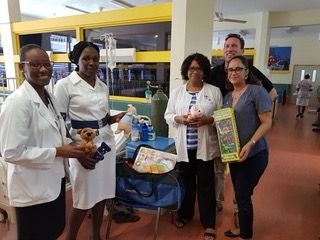
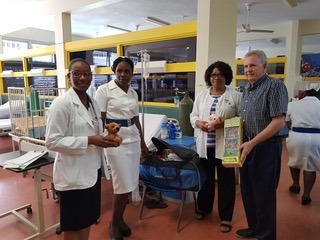
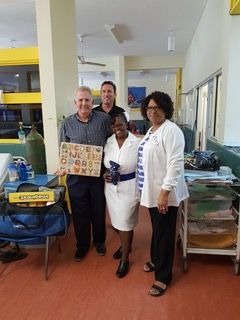
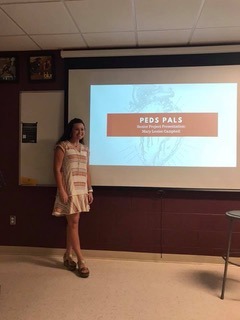
The following year, I designed my senior project, a high school graduation requirement focused on research and exploration in an area of extracurricular interest. My project aimed to raise awareness about pediatric healthcare, highlight World Pediatrics’ efforts to expand access to pediatric care in the Caribbean, and create a welcoming space where children could play during long clinic days. I kept a blog during the project to share my research and post updates on my keystone initiative, a resource drive for a play area in the clinic at Milton Cato. I received books, toys, stuffed animals, games, a play mat, and a bookshelf, which were sent with a surgical team to St. Vincent that following spring.
All in all, when I began applying to medical school and pursuing an education in medicine, I never imagined myself ending back in St. Vincent, but I think it’s exactly where I was meant to be, and I am grateful to continue partnering with World Pediatrics. The opportunity to connect and volunteer alongside physicians and providers from all over the world is not lost on me, and I’m so thankful to have had the opportunity to learn from each and every one.
In January 2026, during a World Pediatric Surgical Mission, I had the opportunity to meet Dr. Lukish, a pediatric general surgeon, and Dr. Reyes, a pediatric anesthesiologist, both from Children’s National Hospital in DC. I am incredibly grateful that they were able to take some time out of their busy schedules not only to volunteer but to allow me and another student to observe and learn from them. Before the surgical case, I asked them about their journey to becoming physicians and for advice for my current stage in school. One of the best pieces of advice that Dr. Lukish shared with me is to continue to learn and be curious. He encouraged me to start thinking about what I might want to specialize in so I could begin building a network and making connections through experiences in that field. I've worked on this during each term break, including traveling to DC in May to visit Children's National Hospital and shadow in their PICU.
When I arrived at Milton Cato to observe Dr. Lukish and Dr. Reyes, I was both nervous and excited. I had observed a dozen or so cesareans over the years shadowing a pediatric hospitalist in Williamsburg, but wasn’t sure how I might react or handle a major surgical operation on a child. The care team was incredibly warm and welcoming, making us feel right at home and easing any nerves. Dr. Reyes encouraged me to stand at the head of the bed to get a better view of the operation while Dr. Lukish explained his thought process and what we were observing. The patient was diagnosed with Hirschsprung disease as a child, a congenital condition in which nerve cells are missing from part of the intestine, leading to difficulty passing stool and potentially causing intestinal obstruction.
The first stage of treatment required a diverting ileostomy to allow safe passage of stool a couple of years prior. During this procedure, Dr. Lukish led the second phase of treatment, a bowel resection and abdominoperineal pull-through, to remove the affected portion of the bowel and reconnect healthy tissue.
What was most interesting to me about this procedure was that, at the time of the operation, I was in the GI module of Term 2 and actively learning about this disease, the pathology, complications, and treatment, so being able to associate that with the clinical procedure allowed me to form a stronger connection and foundation between the classroom material and clinical presentations. This is incredibly valuable as a student and one of the reasons why I am so grateful that Trinity not only allows but encourages early integration of basic science content in a clinical setting. The ability to tie in the pathophysiology of a disease with current treatments and clinical presentations allows me to think critically about the material from a multi-faceted approach and perspective.
After explaining to Dr. Lukish that we were discussing this specific disease in class, he made a point to highlight anatomical features and landmarks pertinent to the procedure and opened the floor to our questions about things such as his approach, strategy, the patient’s prognosis, and any complications that could present. Additionally, Dr. Reyes explained his role as a pediatric anesthesiologist and explained the different indicators on the monitors, critical vs. anticipated values, and how to interpret them. Seeing the whole team work as a fine-tuned machine in synchronicity really highlighted what a large impact every member of the care team plays.
At the conclusion of the case, the patient was then wheeled into the post-operative area where Dr. Lukish and Dr. Reyes spoke with the family members about the success of the case and what to expect over the following hours and days. Having the opportunity to shadow the team from start to finish was incredibly rewarding, and I can’t thank Trinity and World Pediatrics enough for the opportunity.”
From a high school service project in Virginia to observing complex pediatric surgery in St. Vincent, Mary’s journey with World Pediatrics has been years in the making. Along the way, she has gained more than clinical exposure; she has built relationships with physicians, expanded her understanding of global healthcare, and found opportunities to connect what she learned in the classroom with real-world patient care.
Experiences like these reflect the value of learning medicine through both education and service. Through its partnership with World Pediatrics, Trinity is proud to provide students with opportunities to learn alongside experienced healthcare professionals, contribute to communities in need, and discover the many ways they can make a difference as future physicians.
Learn more about the service opportunities available at Trinity School of Medicine.