

Alumni Spotlight: Devon Charlton, MD, MPH, FACP, FACR, DNBPAS
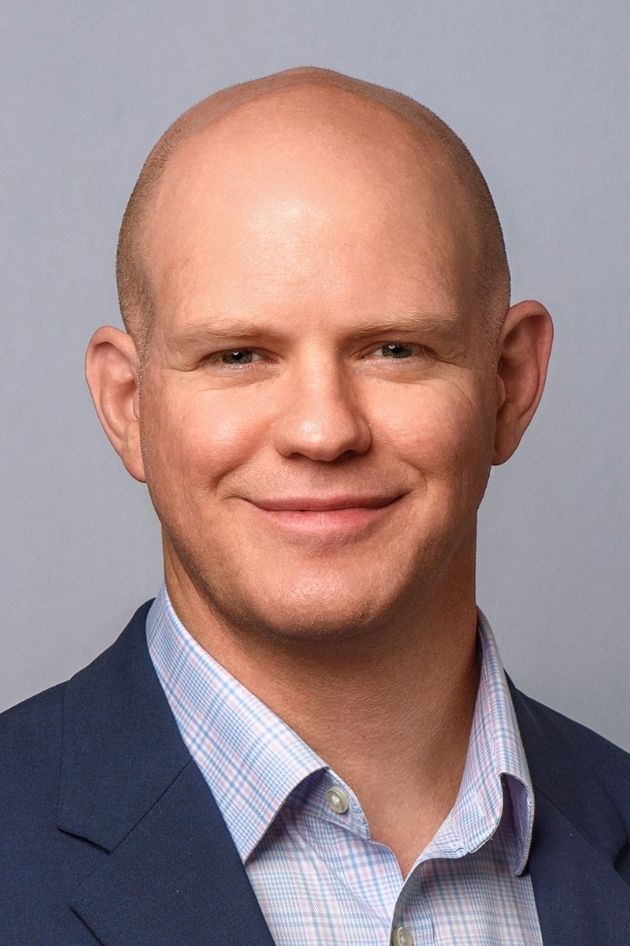
As one of Trinity’s inaugural students, Dr. Devon Charlton was part of the school’s earliest days, when students and leadership were building the program together in real time. Since graduating in 2012, his journey has taken him from clinical rotations across the U.S. to an Internal Medicine residency at Danbury Hospital, an MPH at Johns Hopkins, and fellowship training in rheumatology. Today, he is double board-certified in Internal Medicine and Rheumatology and serves as Director of Rheumatology at UPMC Regional Orthopedics. As a 2012 Trinity graduate from Southern California, Dr. Charlton reflects on his experience at Trinity and the journey that followed.
How would you describe your experiences as one of Trinity's first students?
Being among the first was both exciting and challenging. There were inevitably unforeseen obstacles, and some moments were frustrating, but there was also a real sense of pride in helping forge the path forward. We learned in real time what worked, what did not, and what future students would need to succeed. It has been wonderful to see how the program has grown and how each class has continued to add to its quality and depth.
Where did you go to undergrad and what is your academic background?
I went to MIT (Massachusetts Institute of Technology) for Materials Engineering and Bioengineering.
What inspired you to go into medicine?
I initially pursued translational research and bioengineering. As I became more involved in surgical research and clinical trials through rheumatology, my interest in patient care grew. I realized that while research and engineering were intellectually rewarding, clinical practice was where I could find the greatest sense of purpose.
Why did you choose Trinity and what ultimately helped you make the decision?
Trinity offered a focused, individually tailored program and an opportunity to learn in a global medical environment. Those experiences also helped spark my interest in public health, which ultimately led me to pursue a Master of Public Health at Johns Hopkins.
How well do you feel that Trinity prepared you for the Match?
I was able to excel during clinical rotations, which taught me far more than medical knowledge and test-taking strategies. I gained practical insight into licensing, the business of medicine, different practice styles, EMR platforms, and hospital systems—lessons that proved valuable throughout medical school, residency, fellowship, and independent practice. Just as importantly, those experiences helped me build the relationships that supported my success in the Match.
Where did you match? What was your residency experience like?
I matched in Internal Medicine at Yale-affiliated Danbury Hospital in western Connecticut. The breadth and acuity of cases, along with the emphasis on thoughtful medical management, gave me the confidence and clinical foundation to take the next steps in my career. During residency, I also pursued an MPH at Johns Hopkins and moonlighted in my third year. I later applied and interviewed for fellowships in both gastroenterology and rheumatology.
What skills from your time at Trinity were the most useful during residency?
One of the most valuable skills I developed was the ability to adapt quickly to different clinical, social, and cultural environments—both in the United States and abroad. By rotating in different cities and hospital systems, I gained experience with multiple EMR platforms, clinical workflows, teaching styles, cultures, and patient populations. It also gave me a collection of stories that still helps me connect with and empathize with others today.
What is your current specialty? Where are you practicing?
I am double board-certified in Internal Medicine and Rheumatology. I currently serve as Director of Rheumatology at UPMC Regional Orthopaedics, where I help lead rheumatology care across greater Pittsburgh and western Pennsylvania.
What’s a typical day like as a Rheumatologist?
Rheumatology offers many paths, including private practice, health-system employment, inpatient and outpatient care, and academic roles focused on teaching and research. I chose to build a regional outpatient practice from the ground up. As Director of Rheumatology, my work includes caring for patients, teaching residents and students, and developing quality-improvement initiatives. I typically see 15–20 patients a day, four days a week, and I can add inpatient consultations when needed. That flexibility is especially meaningful because I also handle school and camp drop-off and pick-up for my two young boys.
Was Trinity a good choice for you?
Trinity was a personalized alternative to the more traditional IMG pathways available at the time. As a member of the inaugural class, it was not always the easiest road, but it gave me the chance to understand the process deeply, forge my own path, and receive close support along the way. Looking back, the experience also strengthened my interest in public health—particularly healthcare management, education, and policy.
Did you feel supported throughout your education at Trinity?
Leadership was consistently available for candid, constructive conversations about concerns, opportunities, and what was working well. We understood that we were all in the same boat, working toward the same goal: success.
While at Trinity, were you involved in any research?
As Trinity’s first class, there was limited bandwidth for formal research at the time. However, we founded the first local AMSA chapter and launched several medical outreach and awareness projects serving the local community.
What was the transition like from where you moved from to the island, and then to the U.S. for rotations?
The transition felt more exciting than difficult. It was an opportunity to move forward and prove—beyond the classroom and exams—that I could meet the challenges of becoming a physician.
Where did you take your rotations?
I was in various parts of Chicago, IL; Long Island, NY; and Washington, DC.
Do you feel that Trinity prepared you for your board exams?
Ultimately, board preparation comes down to self-motivation, focused reading, and lots of practice questions—not simply relying on classes or teachers. Trinity gave us a solid foundation and, just as importantly, the time to practice, practice, practice.
What is the best advice you could share with a prospective Trinity student?
Make time outside of studying to experience the beauty of the area—you may never have another opportunity quite like it. Get to know the people around you, including local leaders, whose perspective and wisdom can be invaluable along the way. I still do not regret using precious weekend time to earn my Advanced PADI scuba certification, even though I never quite finished the Rescue certification!
If you’re interested in learning how Trinity can support your dream of becoming a doctor, we invite you to reach out to our admissions team today! Contact us here.


