

Transitioning to Medical School from Nursing, Allied Health, or Another Healthcare Profession
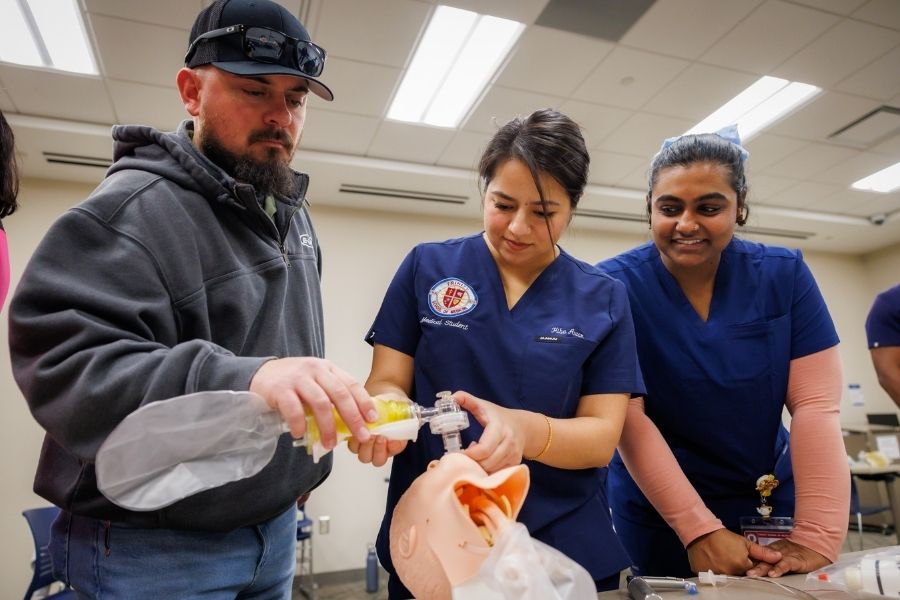
For many nurses and allied health professionals, the journey into healthcare began with a desire to care for patients, to understand the human body, and to play a meaningful role in people’s lives during moments of vulnerability. Over time, clinical experience deepens that desire and sometimes reshapes it.
You may find yourself asking questions about your future, such as:
What if I want more responsibility in patient care?
What if I want to lead clinical decision-making rather than support it?
Is becoming a physician the natural next step in my career?
For nurses and allied health professionals, the transition from healthcare to an MD is not uncommon. In fact, for some, it is a natural progression built on years of clinical exposure, patient interaction, and growing professional confidence.
Here, we’ll explore what it means to become a doctor after working in healthcare, why the transition makes sense for many professionals, the benefits and challenges involved, and how to prepare for medical school to help make the transition as smooth as possible.
The Critical Perspective of Nurses and Allied Healthcare Professionals
Allied health is a broad category that includes healthcare providers who work alongside physicians and nurses to deliver diagnostic, therapeutic, and supportive care. These professionals play essential roles across nearly every healthcare setting.
Allied health professionals include, but are not limited to:
- Physician assistants
- Physical and occupational therapists
- Respiratory therapists
- Radiologic and imaging technologists
- Paramedics and EMTs
- Medical laboratory scientists
- Speech-language pathologists
- Cardiovascular technologists
- And many others
While each of these roles differs in scope and specialization, they share common ground: direct patient interaction, clinical responsibility, and a working knowledge of healthcare systems. Unlike individuals coming to medicine from unrelated fields, allied health professionals already understand the realities of patient care, including the pace, the pressure, the teamwork, and the accountability involved.
Nurses, similarly, bring a depth of patient-centered experience that few other professions can match. They are often the clinicians who spend the most time with patients, monitoring subtle changes, coordinating care, and serving as a bridge between patients and providers.
This perspective matters. Medical education is demanding, but it is also deeply contextual. Students who have already worked in healthcare often arrive with a grounded understanding of why the work matters and what is at stake when it is done well.
Why the Transition to an MD Is a Natural Next Step for Some Healthcare Professionals
The decision to pursue an MD after working in healthcare rarely comes from a sense of dissatisfaction in the field. More often, it grows out of exposure. You’ve seen firsthand how care decisions are made and want to take a more central role in that process.
Many nurses and allied health professionals describe a gradual shift in how they view their work. What begins as skill mastery evolves into curiosity. Why was this diagnosis chosen? What alternatives were considered? How do long-term treatment plans affect outcomes months or years later?
For some, scope-of-practice limitations become more noticeable over time. You may recognize situations where you understand the clinical picture but are not positioned to make final decisions. That awareness can spark a desire for deeper training, greater autonomy, and a more comprehensive role in patient care.
Others are motivated by leadership. Physicians are ultimately responsible for directing patient care, coordinating multidisciplinary teams, and navigating complex medical decisions. For healthcare professionals who already lead informally by mentoring colleagues, managing workflows, and advocating for patients, formal leadership through an MD role can feel like a natural extension of their abilities.
The clinical insight gained through years of patient care often sharpens a healthcare professional’s sense of purpose and clarifies long-term goals.
The Benefits of Pursuing an MD After Working in Healthcare
Choosing to pursue an MD after working as a nurse or allied health professional offers several distinct advantages. Perhaps most significantly, students who enter medical school after clinical practice often have a well-defined understanding of why they are there.
Greater autonomy in patient care is a common motivator. Physicians have the authority to diagnose, develop treatment plans, and manage long-term care. This responsibility allows for a more comprehensive impact on patient outcomes and healthcare delivery.
Career flexibility also expands. An MD opens doors to specialized practice, academic medicine, leadership roles, and system-level influence. For those interested in shaping healthcare policy, education, or innovation, medical training provides a powerful platform.
On a personal level, many healthcare professionals find that becoming a physician aligns their daily work more closely with their long-term values. The transition can be demanding, but it is often deeply fulfilling.
Transitioning From Nurse to Doctor: How Nursing Experience Translates to Medical Training
Nurses who pursue medical school often underestimate how valuable their experience truly is. While the academic demands of medical education are significant, many aspects of nursing practice align closely with the skills physicians rely on daily.
Nurses are trained to assess patients continuously, recognize early signs of deterioration, and prioritize care in fast-paced environments. These abilities translate directly into clinical reasoning and diagnostic thinking. Familiarity with medications, patient education, and interdisciplinary communication provides a strong framework for learning pharmacology, pathology, and treatment planning at a deeper level.
Experience That Supports Success in Medical School
Beyond technical skills, nursing instills professional habits that support success in medical school. Accountability, reliability, and resilience are daily expectations in nursing practice. Nurses are accustomed to high standards, long hours, and emotionally demanding environments. While medical school presents new academic challenges, the pace, pressure, and responsibility of the setting itself are often familiar rather than overwhelming.
Patient Advocacy and Communication
Many nurses bring an advanced understanding of patient advocacy into medical training. Their close, sustained relationships with patients and families foster strong communication skills, empathy, and trust-building. These qualities support clearer histories, better patient education, and more effective shared decision making. As physicians, this foundation often strengthens patient relationships and contributes to improved care outcomes.
How Admissions Committees View Nursing Experience
Admissions committees increasingly recognize the value of nursing experience in medical school applicants. A nursing background reflects commitment to healthcare, professional maturity, and a realistic understanding of clinical environments. It signals that the applicant has already worked within high-responsibility settings and understands the demands of patient care—qualities that align closely with the expectations and responsibilities of a physician.
Transitioning From Allied Health to Medical School: Transferable Skills You May Be Undervaluing
Allied health professionals often view medical school as a leap rather than a continuation, but many of the competencies required for success are already familiar. Clinical reasoning, anatomy, physiology, and evidence-based practice form the backbone of allied health education and provide a strong foundation for medical training.
Whether interpreting imaging, managing ventilatory support, or designing rehabilitation plans, allied health professionals regularly apply scientific principles to real-world patient scenarios. This applied clinical thinking closely mirrors the problem-solving approach expected in medical school.
Experience Navigating Complex Healthcare Systems
Equally important is comfort within healthcare systems. Understanding documentation standards, regulatory compliance, interprofessional collaboration, and patient safety protocols gives allied health professionals a contextual advantage that cannot be taught in a lecture hall alone.
This familiarity allows students transitioning from allied health roles to focus more fully on learning advanced medical concepts, rather than adjusting to the structure and expectations of clinical environments.
Adaptability and Feedback-Driven Learning
Allied health professionals are also accustomed to feedback-driven learning. Clinical environments demand continuous improvement, adaptability, and professional humility, which are traits that translate well to the medical school setting.
Regular performance evaluation, skill refinement, and collaboration with supervising clinicians prepare allied health professionals for the iterative learning process that defines medical education.
How Admissions Committees View Allied Health Experience
Admissions committees increasingly recognize allied health experience as a strong indicator of medical school readiness. Applicants from allied health backgrounds demonstrate sustained commitment to patient care, clinical accountability, and an informed understanding of healthcare environments. Their experience working within multidisciplinary teams and navigating complex clinical systems signals professional maturity, adaptability, and a realistic understanding of the demands of medical training and physician responsibility.
Challenges to Expect When Transitioning from Healthcare to Medical School
While the benefits of becoming a physician are substantial, the transition from healthcare professional to medical student is not without challenges. Acknowledging these realities early is a critical part of preparing well and setting realistic expectations.
Academic Demands
Medical school requires sustained, intensive academic focus. Even experienced clinicians may need time to readjust to exam-centered learning, foundational sciences, and large volumes of information delivered at a rapid pace.
This adjustment period is common among nurses and allied health professionals who may have been away from formal coursework for years. With thoughtful planning, structured study habits, and early support, you can adapt successfully.
Shifting Professional Identity
There can also be an emotional adjustment. Transitioning from a position of clinical competence to one of structured learning may feel uncomfortable at first. Many students must recalibrate their professional identity—from experienced provider to trainee—while continuing to trust in their long-term goals. This shift requires patience and humility as new layers of knowledge are built on an existing clinical foundation.
Financial and Personal Considerations
Financial planning is another important consideration. Medical school often involves tuition costs, reduced income, and significant time commitments, particularly for students with families or established responsibilities.
Common factors students must plan for include:
- Tuition and educational expenses
- Temporary loss of full-time income
- Balancing academic demands with family or caregiving roles
Thoughtful preparation and institutional support can help students navigate these pressures more effectively.
Acknowledging these challenges do not indicate a lack of readiness. It shows an understanding of the path ahead, allowing you to set yourself up for success. Beyond personal preparation, this also means choosing a medical school that offers the structure, guidance, and genuinely supportive learning environment that’s well suited to nurses and allied health professionals.
How to Prepare for Medical School as a Nurse or Allied Health Professional
Preparing for medical school begins long before an application is submitted. For nurses and allied health professionals, thoughtful preparation can ease the academic transition, strengthen an application, and reduce unnecessary stress once training begins.
Reviewing and Completing Prerequisite Coursework
One of the first steps is ensuring all prerequisite coursework is complete and up to date. While requirements vary by medical school, most expect foundational coursework in areas such as biology, chemistry, organic chemistry, physics, and biochemistry.
Healthcare professionals may find that:
- Some prerequisites were completed years earlier and may need refreshing
- Certain courses were never required for their original training
- Additional lab-based coursework may be necessary
Identifying these gaps early allows time to complete coursework strategically, whether through post-baccalaureate programs, extension courses, or part-time enrollment while continuing to work.
Strengthening Academic Readiness
Even experienced clinicians benefit from re-engaging with structured academic study before medical school begins. Reviewing core sciences, practicing test-taking strategies, and rebuilding study routines can make the transition smoother.
This preparation is less about mastering content in advance and more about rebuilding the habits, such as time management, active learning, and sustained focus, that medical school will demand.
Crafting a Clear and Compelling Application Narrative
Equally important is developing a clear explanation for the transition to medicine. Admissions committees want to understand not just why you want to become a physician, but why now.
Strong applications clearly articulate:
- How clinical experience shaped your long-term goals
- What motivated your decision to pursue an MD rather than remain in a current role
- How prior healthcare experience prepared you for medical training
Securing Strong Letters of Recommendation
Letters of recommendation carry added weight for applicants with healthcare experience. Supervisors, physicians, or academic instructors who can speak to clinical judgment, work ethic, and readiness for advanced responsibility are especially valuable.
Choosing recommenders who understand both your professional background and your goals can strengthen credibility.
Preparing Mentally for the Transition
Medical school is rigorous, but progress is cumulative rather than instantaneous. Consistency, adaptability, and a willingness to seek support are far more important than perfection.
Students who approach the transition with patience, accepting that adjustment takes time, are often better positioned to thrive academically and personally.
What to Look for in a Medical School as a Healthcare Professional
Not all medical schools are equally suited to students transitioning from healthcare roles. Key considerations include faculty accessibility, institutional support for non-traditional students, and curriculum efficiency.
Programs that value collaboration over competition, provide structured exam preparation, and offer stability during clinical rotations can make a significant difference in student experience and outcomes.
Why Trinity School of Medicine Is a Great Fit for Nurses and Allied Health Professionals
For nurses and allied health professionals ready to take the next step toward becoming physicians, choosing the right medical school is critical. Trinity School of Medicine offers an environment intentionally designed to support students who bring real-world clinical experience, professional maturity, and clear purpose into medical training.
Accredited and Aligned With U.S. Licensure
Trinity is accredited by CAAM-HP, the primary accrediting authority for Caribbean medical schools. This accreditation ensures that Trinity’s curriculum, faculty, and outcomes meet rigorous international standards. It also allows our graduates to participate in the residency match processes in the United States and Canada, as well as apply for residencies and licensure in both countries
For students transitioning from nursing or allied health roles, many of whom plan to practice in the U.S., this alignment provides assurnace that their medical education supports long-term professional goals.
High-Quality Academics
Trinity’s MD program is modeled on U.S. medical education and emphasizes academic rigor without unnecessary redundancy. The curriculum uses a spiral learning model, meaning key concepts are revisited and reinforced over time, rather than taught once and left behind.
For students with prior clinical exposure, this approach supports deeper understanding by:
- Reinforcing foundational sciences as clinical relevance increases
- Strengthening long-term knowledge retention
- Supporting board exam preparation through repeated integration of concepts
Students complete basic sciences in just 16 months, allowing them to return to the U.S. sooner and maintain momentum toward clinical training.
Personalized Education and Accessible Faculty
Small class sizes are a defining feature of the Trinity experience. With close faculty access and individualized support, students are known by name rather than treated as numbers.
This personalized approach is especially valuable for nurses and allied health professionals who may be balancing family responsibilities, returning to academics after time in practice, or adjusting to the demands of medical school. Faculty mentorship, academic guidance, and early intervention help students stay on track and supported throughout the program.
A Clear, Structured Pathway Through Clinical Training and Residency
Trinity removes many of the logistical burdens that often complicate medical training. All core clinical rotations are arranged in a single U.S. location, eliminating the need for repeated relocations and gaps between clerkships.
This structure allows students to:
- Focus fully on clinical learning
- Maintain stability for themselves and their families
- Build continuity within one hospital system
In addition, Trinity provides structured support for residency preparation, helping students navigate the transition from medical school to graduate medical education.
A Track Record of Student Success
Outcomes matter, especially for students making a significant career transition. Trinity’s commitment to student success is reflected in our results, including a 96% USMLE Step 2 pass rate and a 96% all-time residency placement rate.
These outcomes reflect not only academic preparation, but also the school’s sustained investment in student support, mentorship, and long-term success.
Take the Next Step in Your Medical Career
As a healthcare professional, your experience and perspective are valuable assets as you consider the transition to medical school. And with the right preparation and support, your path to an MD is both realistic and achievable.
Take the next step by reaching out to Trinity School of Medicine to speak with an admissions counselor today. Or, get started on your application.


